-
Your shopping cart is empty!


MENU
Your shopping cart is empty!

 These are the most common knot used to keep Pearls and beads in place within your jewellery design. If you can tie your shoes then you will be able to master the overhead knot! It is a simple loop with your cord that is pulled in opposite ends to tighten. Make sure your knot is large enough that it doesn’t pass through the bead and try to get as close to the bead as possible. Placing knots in-between each of your beads or pearls ensures they stay in place and lessens any damage or abrasion.
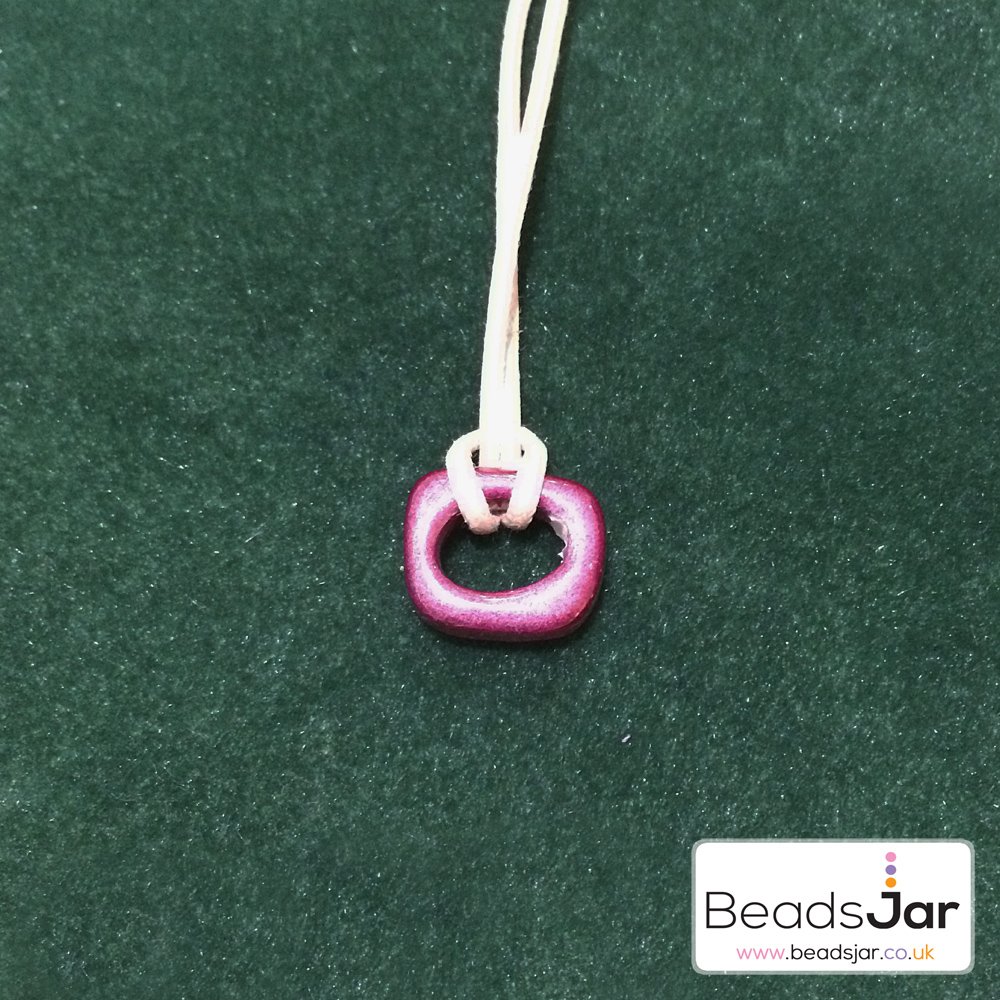 This is another basic knot which is easy to create and is predominantly used to attach pendants or clasps to your pieces of jewellery. The material you use depends on the weight of the pendant but it is more commonly used with hemp, twine and cord. Simply fold your stringing material in half and pass the folded end through the loop/pendant then pull the ends of the cord through the loop you have created. Once you have done this your pendant will sit securely within your cord.
 Create a sliding knot to finish your necklace or bracelet designs to make them adjustable. Simply slide the knots to adjust the size of your jewellery without use of crimps, clasps or jump rings in your design. When you are measuring your cord you will need to add on approximately 8 inches for your knotted finish. Once you have completed your piece you can always trim the cord to adjust the size. Remember that you need to add your beads and charms onto your bracelet or necklace before you make the sliding knot finish. The sliding knot consists of making two tunnels of loops which once finished will be able to slide apart to adjust the length of your cord.
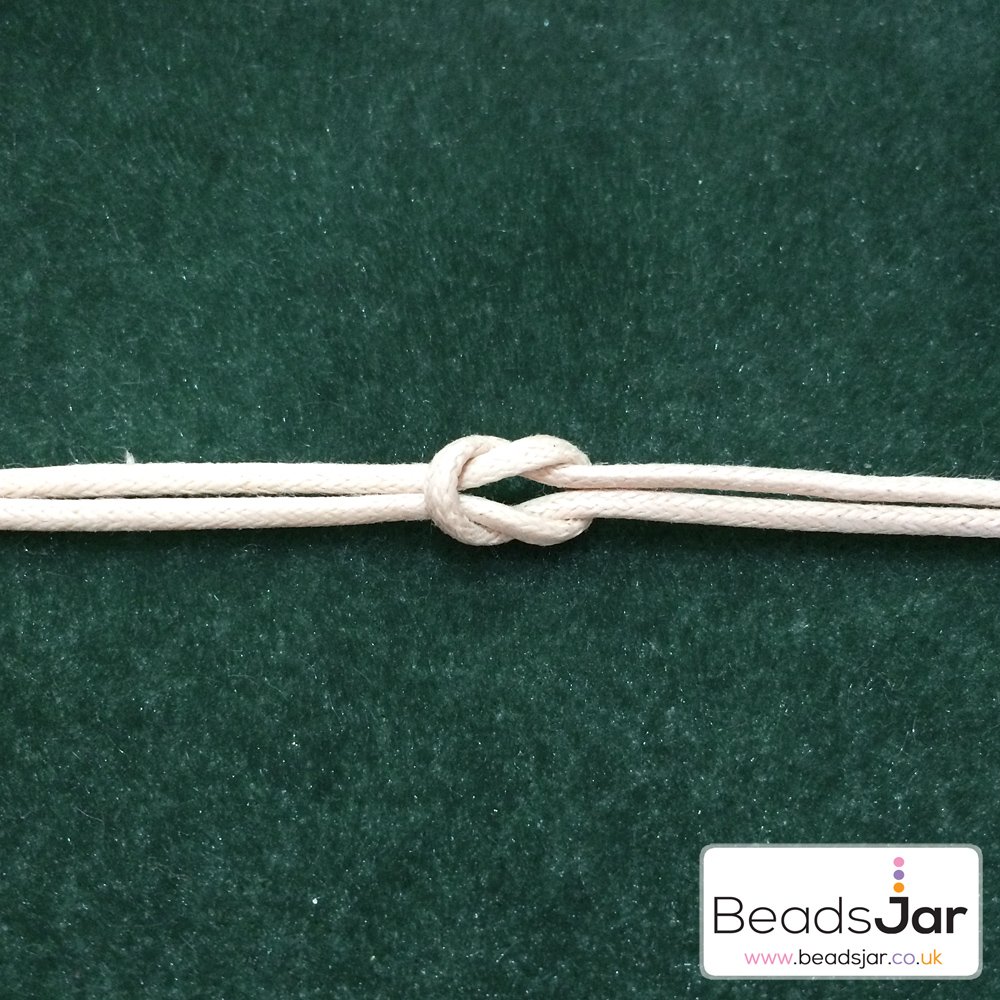 For these knots you will need to hold the ends of your thread securely using either a clip board or taping them to a hard flat surface. The square knot is used in braided jewellery to create a simple decorative finish. To show off the knot we recommend using 4 strands of thread to make the pattern bolder. You can make a completely braided bracelet using this type of knot with added beads to embellish your design or simply let the knots do the talking. Each square knot is created by twisting the outer cords in a loop around the centre cord twice to make a square braided effect. It is simple to master this type of knot and you can experiment with different materials and colours to create a fabulous bracelet design.
 This is a strong knot which adds a secure finish to your jewellery design. It is similar to the square knot however it has extra twists within it which makes it durable and doesn’t slip. It is ideal to use for elastic or slippery stringing materials to end your bracelet or necklace. Unlike the square knot it is not generally used as decoration within your design but to tie your threads together in a firm bond to finish your piece of jewellery.
 Use this kind of knot to add a decorative touch to your jewellery and macramé projects. It is also known as a pretzel knot due to its resemblance to the pretzel shape. It can be used to create a focal point in a design and works well using a variety of hemp and cords. Ensure you clip your stringing material to a board or hard, flat surface to hold it secure whilst you finish your design. The Josephine knot consists of twisting your cord into two conjoined loops to create a pretzel shape which looks fantastic created into a bracelet. Not sure how to incorporate this knot into a design? Take a look at our Josephine Tassel Bracelet design.
 There are no products to list in this category.